
Soft-rock geologists (sedimentologists) will find Florida geology attractive. But if you are, like myself, a hard-rock geologist, a petrologist-mineralogist, or a mining geologist, you could say that the geology of Florida is boring. It is like comparing Lake City fair to Disneyworld. Florida has no snowcapped mountains, no valleys or deep canyons, no glaciers, no volcanoes, no fault line, and it does not experience (only remotely) earthquakes or volcanic eruptions. However, Florida geology has its charm and a tumultuous history that deserves some attention. To study Florida geology is to study ecosystems, coastal processes, coral reefs, karstic terranes, running water and groundwater that constantly shaped the land to what it is today.
II - The African Origin Of Florida:
As I like to put it, Florida is a runaway child from Africa who left the continent to find refuge in North America. It is a geological equivalent of a refugee. There you have it, Florida was once part of Africa.
The Florida Platform or Plateau is 530 million years old and was born before the Continental Drift split , an ancient landmass, into the continents we see today. The Earth itself is estimated to be 4.6 billion years old. During the split of Pangea, 230 million years ago, Africa and South America were stuck together. Then that would become the Florida Platform, drifted away and collided with the North American continent to become the basement rocks of the Florida Peninsula today.
Runaway pieces of continents that drift away and attach themselves to major landmasses are nothing new. Such foreign migrating fragments of continents are called “” and are found also in the West Coast of the North American continent.
Many of these migrant pieces of land were brought from Mexico or the Pacific plate by tectonic activity. They are now part of the United States and Canada but are still sliding North.
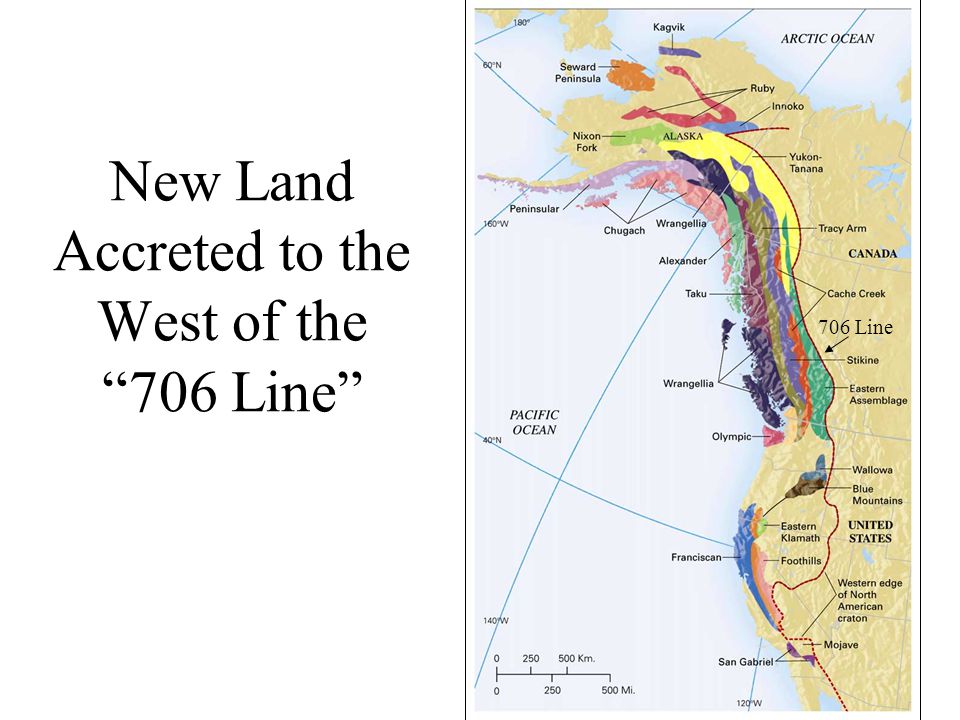
Now, Do The Continental Drift Sid Shuffle:
Florida, compared to the rest of the country, is very young and is shaped by the ocean as a result of climate change and sea level fluctuations.
Questions:
Please read the attached document and let us know what caught your attention the most by answering these questions.
1. Were you aware that Florida was a runaway child from Africa, and is mostly an ocean-born land?
2. Did you know that limestone was the major rock formation in Florida and it forms in the ocean?
3. Have you ever held a limestone rock? You can find one around you, in your backyard.
3. Did you know that all our drinking water is stored in limestone, the Floridan aquifer?
4. Were you aware that Florida could sink again under water up to 100 feet maybe? Don’t move to South Dakota yet,
5. When driving in Florida, have you noticed lowlands and highlands?
6. Shouldn’t we call Florida the Ocean state or the limestone state instead of the sunshine state? Florida is only the 10th sunniest state in USA. Hawaii (an Island) is the only state surrounded by more water than Florida.
The sunniest U.S. states are (Kilo Joules /m2):
- - 5,755 kJ/m^2
- - 5,642 kJ/m^2
- - 5,296kJ/m^2
- - 5,137 kJ/m^3
- - 5,050 kJ/m^2
- - 4,960 kJ/m^2
- - 4,912 kJ/m^2
- - 4,890 kJ/m^2
- - 4,887 kJ/m^2
- Florida – 4,859 kJ/m^2
Open the document attached at the end of the page.
________________________________________________________________________________________________________________________________________________
A student wrote:
"I was aware of the Pangea split, but not that Florida came from Africa and ended up attaching itself to North America. I am honestly not sure how I feel about that. If all of the countries were together to begin with, then wouldn’t it be possible that Florida was just a broke off piece, (an island) not belonging to anyone during the split. How do they know it was strictly part of Africa to begin with? I was also aware that Florida was ocean-born land. It makes the most sense, the fact that it is a peninsula and surrounded by oceans.
Answer:
Thank you very much for asking for more clarity to the statement.
If you watch the video in the text, and keep your eyes closely to the area between Africa and South America, you will see that Florida was part of Africa after North America broke away from Africa and South America. Then Florida detached itself from Africa as an exotic terrane. Afterwards, it moved away from Africa and decided it would be better off migrating to North America. The conclusion was reached by studying the age and the correlations of rocks between West Africa and the Eastern Part of North America.
This geological map shows a suture between Florida and the South-Eastern US states that indicates the foreign origin of Florida.
The Appalachians mountains themselves have a sister mountain located in West Africa called Mauritanides belt, and another one in western Europe called the Caledonian mountain. It was all one mountain belt before the split of Pangea. The opening of the Atlantic ocean separated these formations which then evolved separately. In my French doctorate thesis, I studied this Mauritanides mountain rock formations and showed how they split from the Appalachians.
- Kane, M., 1986: Ophiolitic characteristics for the mafic-ultramafic formations of the Pan-African belt: Metallogenesis and geochemistry of associated Cr, Ni, Co, PGE, Au, and Cu occurrences. A prospection guides for the area. PhD thesis, Univ. of Nancy (France), 297p, Unp., in French.
- DuPont, P.L., LAPierre, H., Kane, M.,..,1985: A possible Red-sea type environment for he incipient Pan African basic volcanism in Western Africa inferred from its petrological and geochemical features. 13th colloquium of African geology, Sept. 11 – 13th, St-Andrews (Scotland, UK). Abstract/p.121.
Most of these correlations studies between North America and Africa were done by a collaboration between the University of Georgia and some French and African geologists under the direction of Professor R. D. Dallmeyer. Here is an article written by him and a French geologist that documents the age and the nature of the rocks between Florida and West Africa, and proved that Florida basement rocks were attached to Africa after Pangea opened up.
Professor Dallmeyer organized an international meeting financed by the United Nations/UNICEF to study the geological correlations between West Africa and the Western USA. Many geologists around the world were present at this conference I also attended in Mauritania, and presented some of my work in that regard.
- Kane, M., 1987: Evidence for an ophiolitic mafic-ultramafic complex in the central part of the Mauritanides belt. International Geological Correlations Program (United Nations Education Science and Culture Organization/International Geological Correlation Program 233), Dec. 11-17, 1987, Nouakchott (Mauritania). Abstract, pp. 113-115.
I have provided all these references to the attachment of the Geology of Florida post. Please read them.
NEED ASSIGNMENT HELP?
We guarantee plagiarism-free and AI-free writing services. Every assignment is crafted with originality, precision, and care to meet your academic needs.
Ready to get started? Place your order directly on this post!
Let us help you achieve excellence—authentic work, every time.

Leave a Reply